
A hint of spice dances through the air as I flip open my favorite cookbook, landing on a vibrant dish that never fails to ignite my culinary imagination: Thai Basil Eggplant. This quick and flavorful stir-fry whisks me away from the traditional takeout scene, delivering a satisfying, healthy twist that’s perfect for any night of the week. With tender, caramelized eggplant wrapped in a sticky, sweet-salty sauce enriched by garlic and ginger, it comes together in under 30 minutes—a total win for busy weeknights! Plus, it’s a fantastic vegan option, ensuring everyone at the table feels right at home. Are you ready to unleash some deliciousness in your kitchen? Let’s get cooking!
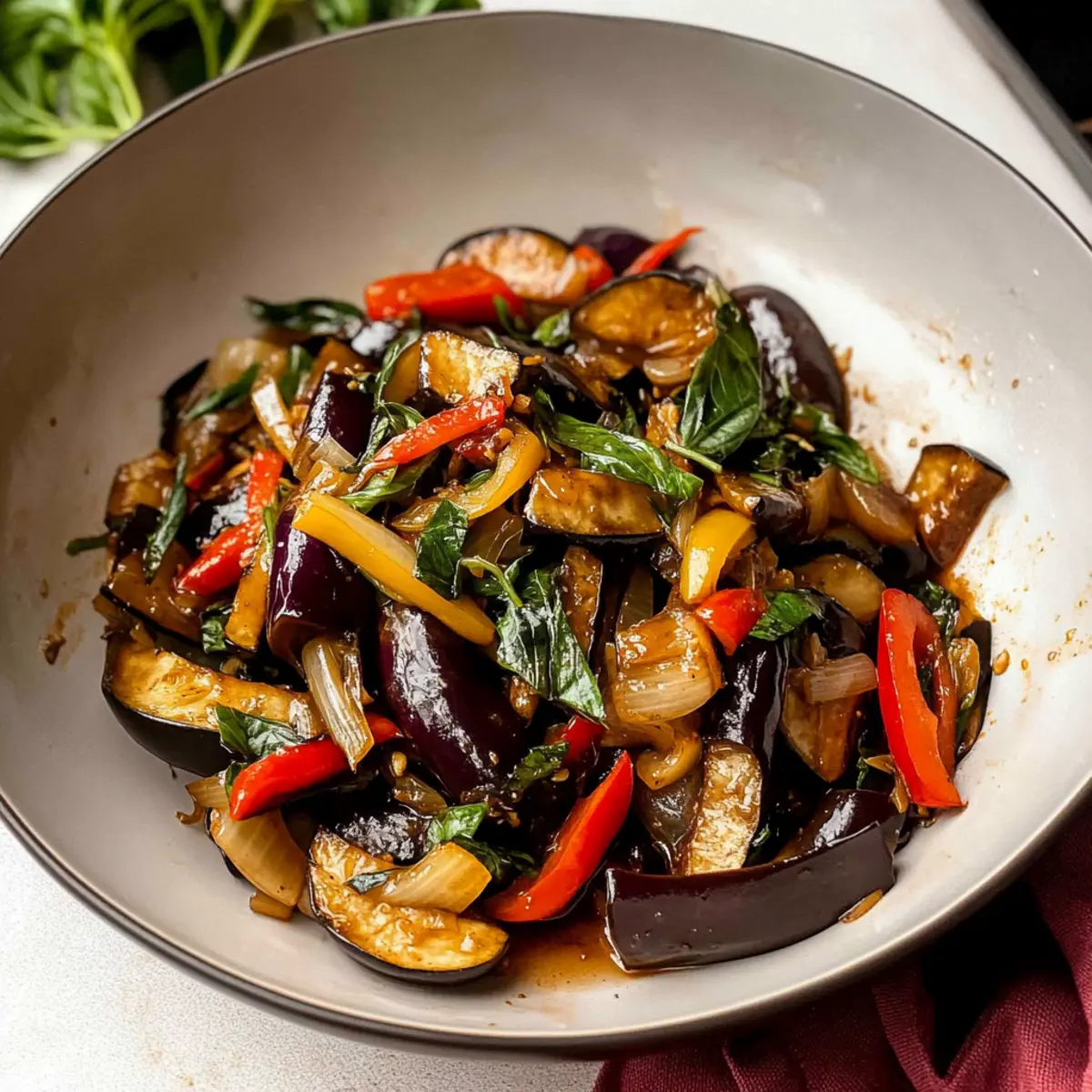
Why is Thai Basil Eggplant a must-try?
Flavorful and Aromatic: This dish bursts with the fragrant notes of fresh Thai basil, garlic, and ginger, offering a comforting yet invigorating culinary experience.
Quick Prep Time: In under 30 minutes, you’ll have a delicious meal on the table, making it perfect for those hectic weeknights.
Versatile Ingredients: Feel free to swap in your favorite veggies or proteins, whether you prefer tofu, shrimp, or even chicken. The possibilities are endless!
Healthy and Satisfying: With a low-calorie count yet rich in fiber, this dish satisfies those comfort food cravings while keeping things nutritious. Pair it with jasmine rice for a complete meal!
Catering to Dietary Needs: It’s not just vegan; with simple substitutions, this recipe caters to gluten-free diets too. Everyone can enjoy a plate of this tasty stir-fry!
Get ready to elevate your home dining experience with this delightful Thai classic!
Thai Basil Eggplant Ingredients
For the Sauce
• Tamari or Soy Sauce – Provides savory depth; use gluten-free tamari for a gluten-free version.
• Dark Soy Sauce – Adds richness and color; can substitute with more regular soy sauce if needed.
• Vegetarian Oyster Sauce – Contributes umami flavor; substitute with additional soy sauce if unavailable.
• Rice Vinegar – Offers acidity and balance; substitute with apple cider vinegar if needed.
• Maple Syrup or Coconut Sugar – Adds sweetness to balance savory flavors; substitute with sugar if necessary.
• Cold Water – Used for cornstarch slurry.
• Cornstarch – Thickens the sauce; can substitute with arrowroot powder for a similar effect.
For the Stir-Fry
• Neutral Oil (Avocado or Grape Seed) – Used for stir-frying; any high smoke point oil can be used.
• Japanese Eggplants – Soft, tender, and less bitter; cut into bite-sized pieces; can substitute with globe eggplants but consider peeling for texture.
• Red & Yellow Bell Peppers – Adds sweetness and crunch; you can use other bell peppers or omit for a simpler dish.
• Onion – Provides savory base flavor; can substitute with shallots.
• Garlic – Offers aromatic depth; use fresh for best flavor.
• Ginger – Fresh ginger enhances aromatic notes; use ground ginger in a pinch.
• Red Thai Chili – Adds heat; adjust quantity according to spice preference or omit entirely for a milder dish.
• Thai Basil – Imparts a unique, peppery aroma; substitute with Italian basil if Thai is unavailable.
For Serving
• Jasmine or Basmati Rice – Complements the stir-fry; can substitute with quinoa for a different base.
This Thai Basil Eggplant recipe packs in rich flavors and vibrant ingredients, making it a delightful choice for hearty home-cooked meals!
Step‑by‑Step Instructions for Thai Basil Eggplant
Step 1: Prepare the Sauce
In a medium bowl, whisk together tamari, dark soy sauce, vegetarian oyster sauce, rice vinegar, and maple syrup until well combined. In a separate small bowl, mix cornstarch with cold water until smooth to create a slurry. This sauce will infuse your Thai Basil Eggplant with a rich, savory flavor that sets the stage for the stir-fry.
Step 2: Cook the Eggplant
Heat 1 tablespoon of neutral oil in a large skillet over medium-high heat. Once the oil shimmers, add the bite-sized Japanese eggplant and toss to coat in the oil. Cover the skillet, sprinkle in a little water, and cook for 4-5 minutes until the eggplant is tender but still slightly firm. Remove the eggplant from the skillet and set it aside as you prepare the rest of the vegetables.
Step 3: Stir-fry Peppers and Onions
In the same skillet, add the remaining oil, and heat over medium-high. Once hot, toss in chopped onion and diced red and yellow bell peppers. Sauté these colorful veggies for 5-6 minutes until they soften and become slightly caramelized, enhancing their natural sweetness. The vibrant hues will signal that it's time to move on to the next aromatic step.
Step 4: Add Aromatics
Stir in minced garlic, grated ginger, and sliced red Thai chili to the skillet, cooking for about 1 minute until fragrant. The aroma of these ingredients will fill your kitchen, adding an irresistible depth to your Thai Basil Eggplant. Make sure to keep the heat at medium-high to celebrate their bold flavors without burning them.
Step 5: Combine Sauce with Veggies
Pour the previously prepared sauce and cornstarch slurry into the skillet, stirring to combine with the sautéed vegetables. Bring this mixture to a gentle simmer, allowing the sauce to thicken slightly and coat the vegetables evenly. The bubbling sound will assure you that the flavors are melding beautifully in your dish.
Step 6: Return Eggplant to Skillet
Gently add the cooked eggplant back into the skillet, stirring to combine with the thickened sauce and vegetable medley. Cook for an additional 2 minutes, ensuring the eggplant heats through and absorbs the delicious flavors of the sauce. You’ll notice the sauce becoming glossy and sticky, enhancing the overall presentation of your Thai Basil Eggplant.
Step 7: Add Thai Basil & Serve
Finally, stir in fresh Thai basil just before serving, allowing it to wilt slightly and infuse the dish with its aromatic essence. Serve your Thai Basil Eggplant hot over a bed of jasmine or basmati rice, garnishing with extra basil for a beautiful finish. This quick and flavorful stir-fry is now ready to enjoy and impress your family!
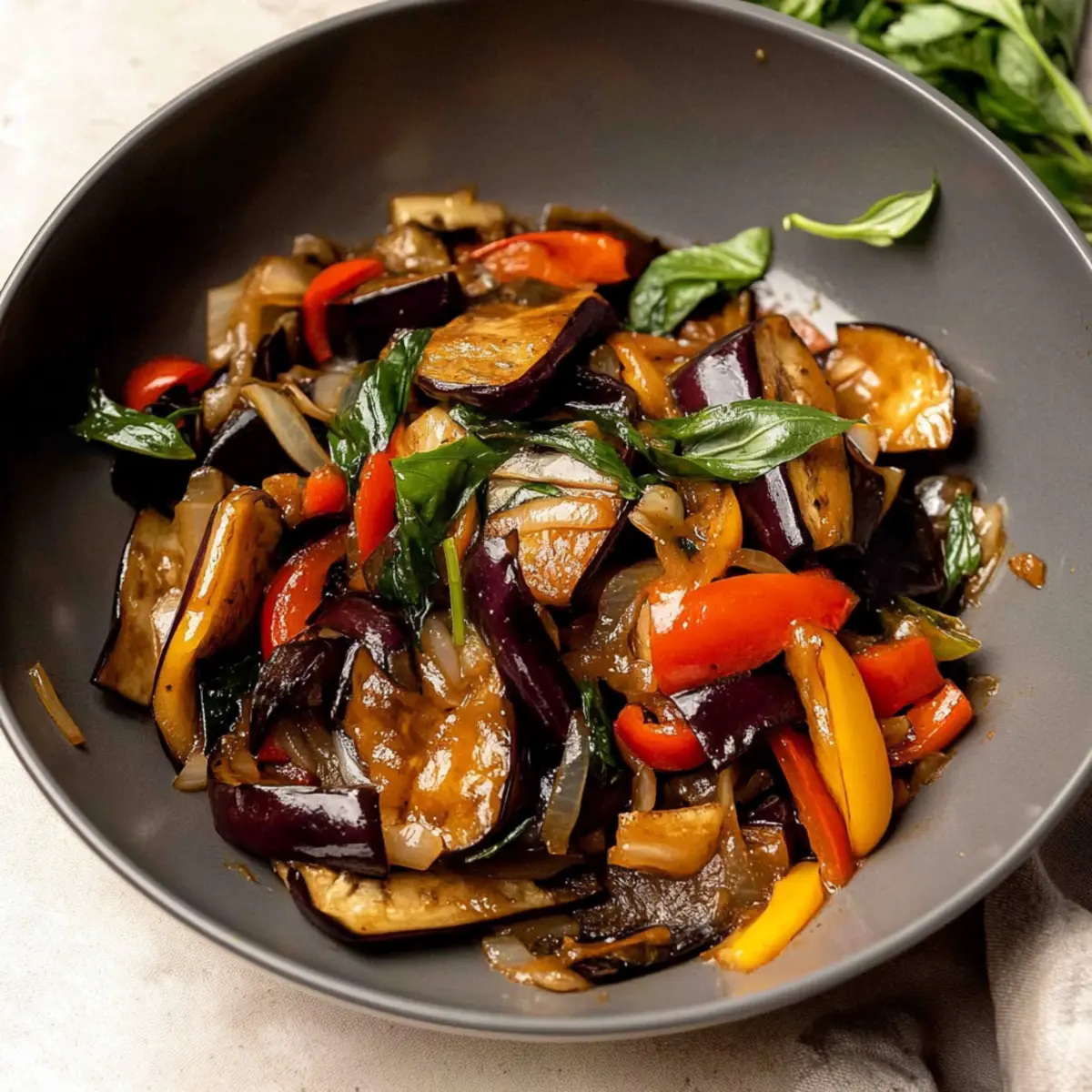
What to Serve with Quick and Flavorful Thai Basil Eggplant Stir-Fry
Imagine a colorful spread of dishes that perfectly complements the aromatic and savory Thai Basil Eggplant, creating a fulfilling and hearty meal.
-
Steamed Jasmine Rice: This fluffy rice acts as a perfect backdrop, absorbing the rich flavors of the stir-fry while adding a comforting texture.
-
Fresh Cucumber Salad: A bright, crisp salad drizzled with lime juice adds a refreshing contrast, cutting through the savory sweetness of the eggplant.
-
Thai Spring Rolls: Crunchy and filled with fresh herbs, these rolls offer a delightful textural contrast and amplify the Thai theme.
-
Grilled Tofu Skewers: Adding protein, these marinated grill marks entice with smoky flavors, enriching your meal without overpowering the dish.
-
Mango Sticky Rice: For dessert, this sweet treat balances the savory eggplant beautifully, leaving you with a satisfying sweet ending.
-
Coconut Water: Light and refreshing, this drink complements the dish while enhancing the tropical experience of your meal.
-
Peanut Sauce: A creamy dip for vegetables or spring rolls will add a touch of nutty goodness, enhancing each bite with rich flavors.
-
Thai Iced Tea: The sweet and creamy layers in this iconic drink have an elegantly cooling effect that rounds out the spiced notes from the eggplant.
Indulging in these delightful pairings opens a world of flavors, celebrating the harmony of this quick and flavorful Thai Basil Eggplant stir-fry!
Make Ahead Options
These Thai Basil Eggplant stir-fry ingredients are perfect for meal prep, saving you valuable time on busy weeknights! You can chop the vegetables and prepare the sauce up to 24 hours in advance, storing them separately in airtight containers in the refrigerator to maintain freshness. To keep the eggplant from browning, store it in a bowl of salted water until ready to use. When it’s time to enjoy your dish, simply stir-fry the prepped veggies, add the sauce, and cook the eggplant until heated through — in just a few minutes, you'll have a delicious meal on the table, just as satisfying as if made fresh!
Storage Tips for Thai Basil Eggplant
Fridge: Store leftovers in a sealed container for up to 3 days to maintain freshness and flavor.
Reheating: When ready to enjoy, reheat in a skillet over medium heat for best results. You may add a splash of water to retain moisture while heating.
Freezer: Avoid freezing this dish as the eggplant’s texture can become mushy upon thawing, compromising the overall experience.
Airtight Storage: Ensure your container is airtight to prevent the absorption of other odors and maintain the vibrant taste of your Thai Basil Eggplant.
Thai Basil Eggplant Variations & Substitutions
Feel free to explore these delightful twists and tweaks to customize your Thai Basil Eggplant to your taste!
-
Veggie Swap: Substitute Japanese eggplants for zucchini or mushrooms to enjoy a different veggie flavor and texture.
-
Protein Boost: Add sautéed tofu, shrimp, or chicken during the stir-fry step for an extra protein kick that melds beautifully with the sauce.
-
Mild & Sweet: If you prefer a milder dish, replace red Thai chilies with sweet bell pepper strips. You can also control the sweetness by adjusting maple syrup to taste.
-
Seasonal Touch: Experiment with seasonal vegetables like snap peas or baby corn to give your stir-fry a fresh and vibrant twist.
-
Substitute Oils: Use sesame oil instead of neutral oil to add a nutty flavor that complements the dish's authenticity.
-
Herb Alternatives: If Thai basil isn't available, Italian basil or even mint can be good substitutes to impart freshness in unique ways.
-
Different Rice Base: Serve your stir-fry over quinoa or cauliflower rice for a low-carb alternative that still delivers on flavor.
-
Heat It Up: For an extra kick, consider adding a pinch of red pepper flakes alongside the aromatics for an additional layer of spice.
Remember, cooking is all about personal expression, so follow your taste buds and enjoy creating your version of this delicious dish! For more inspiration, check out our delectable Vegan Pad Thai or dive into a delightful Green Curry to further enrich your weeknight meals.
Expert Tips for Thai Basil Eggplant
• Perfect Eggplant Texture: Avoid overcooking the eggplant; it should be tender yet firm. This ensures a delightful bite in your stir-fry.
• Adjusting Spice Levels: Modify the heat from Thai chilies based on your preference—remove seeds for milder flavor or add more for a spirited kick!
• Protein Boost: Want more protein? Add tofu or tempeh during the stir-frying process. This complements the Thai Basil Eggplant perfectly!
• Sauce Consistency: Ensure your cornstarch slurry is smooth to prevent clumping in the sauce. This results in a beautifully shiny finish!
• Fresh Ingredients Matter: Use fresh garlic and ginger for the best flavor. Dried alternatives simply won't compare in this vibrant dish!
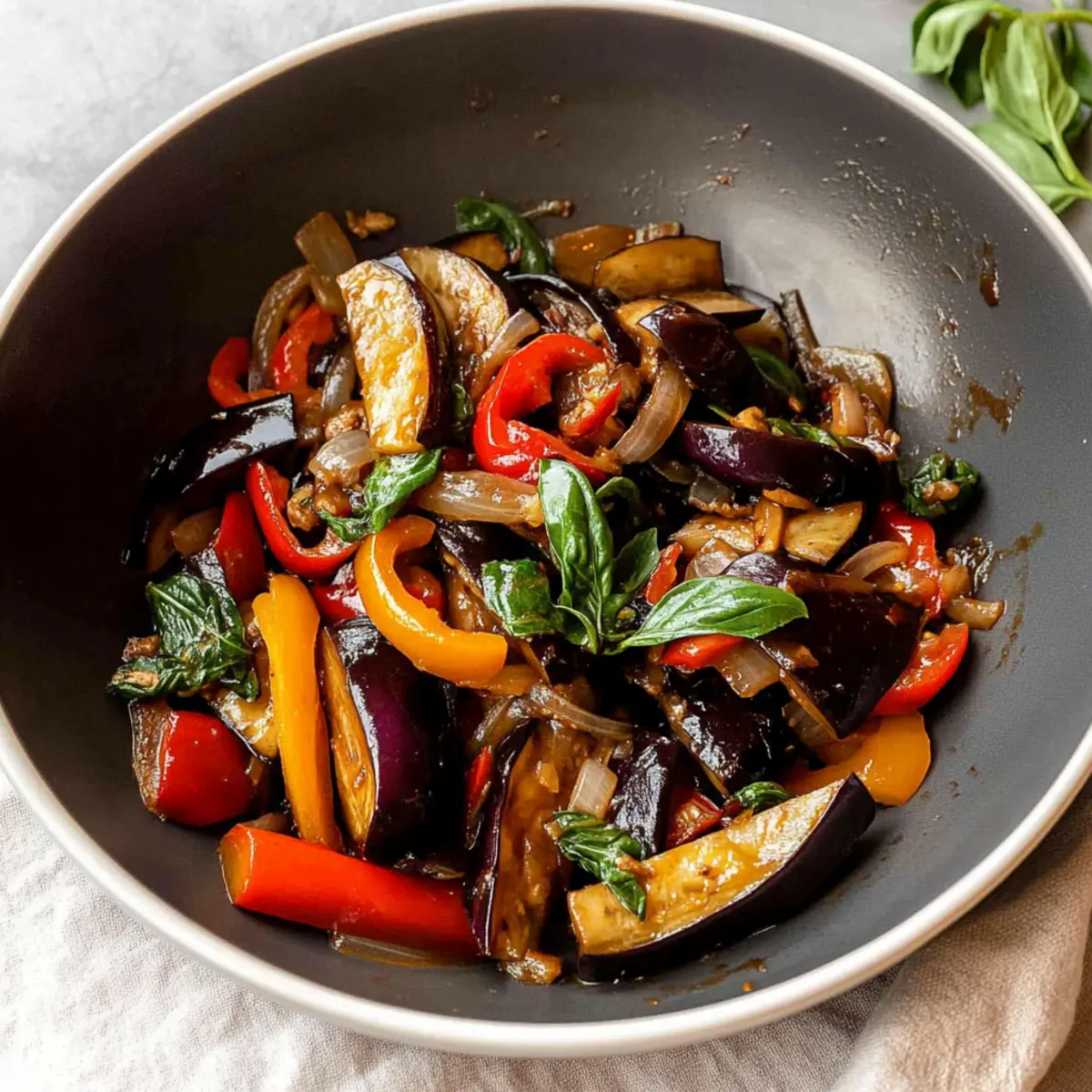
Thai Basil Eggplant Recipe FAQs
How do I choose the right eggplant for this recipe?
Absolutely! Look for Japanese eggplants that are glossy, firm, and free of dark spots or blemishes. The skin should be smooth, indicating freshness. If you prefer globe eggplants, that's fine too—just peel them to reduce bitterness and enhance the texture.
What’s the best way to store leftovers of Thai Basil Eggplant?
Very good question! Store any leftovers in an airtight container in the refrigerator for up to 3 days. Make sure it’s sealed well to keep the flavors intact. When you're ready to eat, reheat it in a skillet over medium heat and add a splash of water to prevent it from drying out.
Can I freeze Thai Basil Eggplant?
I would advise against that! Freezing this dish can compromise the eggplant's texture, making it mushy when thawed. Instead, enjoy it fresh or keep your leftovers in the fridge for a delicious quick meal later!
What should I do if my sauce doesn’t thicken properly?
No worries! If your sauce is too thin, return it to a gentle simmer and stir in a little extra cornstarch mixed with cold water to create a slurry. Add it slowly while stirring, and allow it to cook for a few minutes to see if it thickens. Patience is key here!
Is this Thai Basil Eggplant recipe suitable for a gluten-free diet?
Absolutely! To make this dish gluten-free, simply use tamari sauce instead of traditional soy sauce. Most sauces like vegetarian oyster sauce come in gluten-free versions, so always check the labels. Your gluten-free friends will appreciate the effort!
Can I add protein to this stir-fry?
Of course! For a protein boost, consider adding cubed tofu or tempeh during the stir-frying process. You can also toss in cooked shrimp or chicken for a different take. Just adjust cooking times slightly to ensure everything is cooked perfectly!
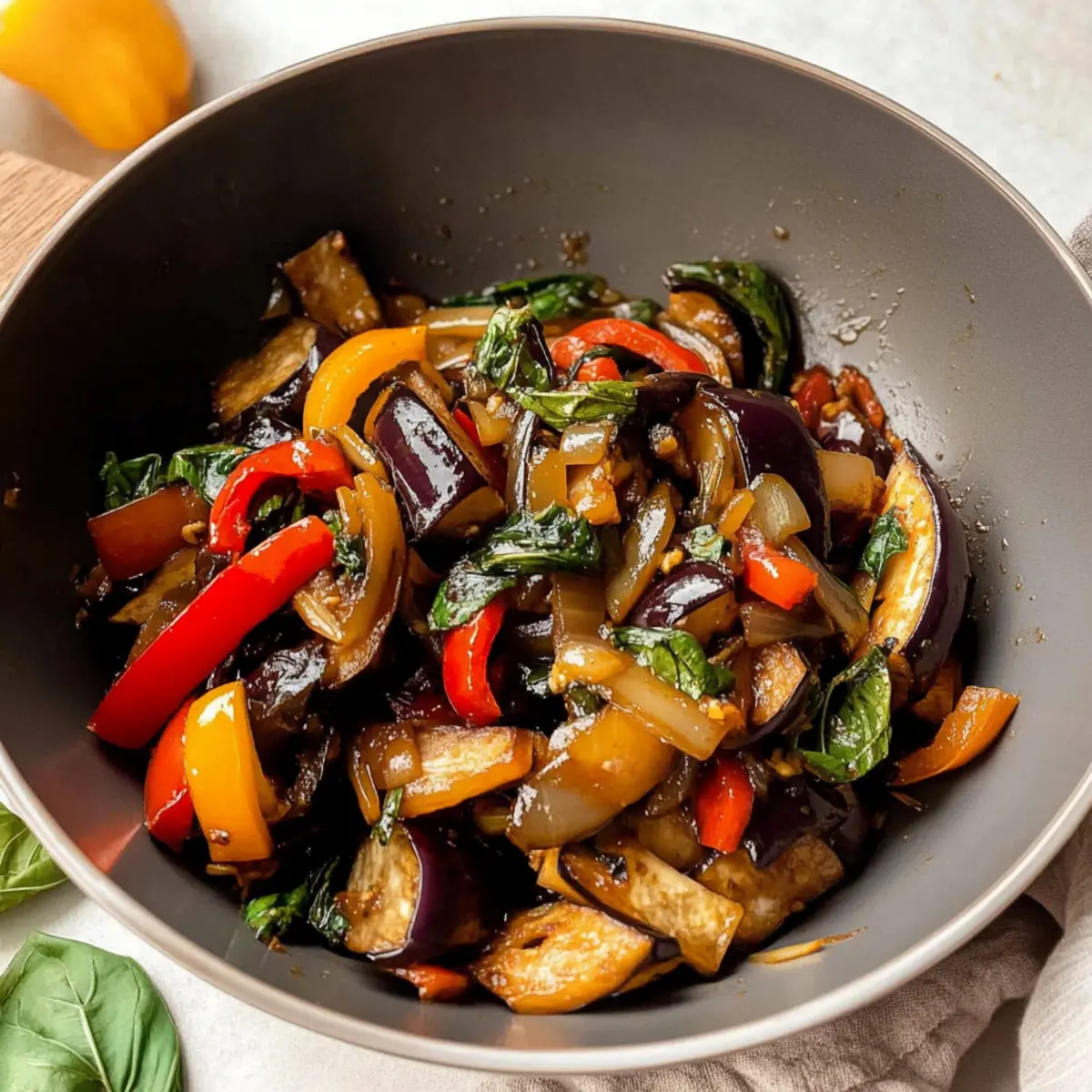
Savor the Flavor: Quick Thai Basil Eggplant Stir-Fry
Ingredients
Equipment
Method
- In a medium bowl, whisk together tamari, dark soy sauce, vegetarian oyster sauce, rice vinegar, and maple syrup until well combined. In a separate small bowl, mix cornstarch with cold water until smooth to create a slurry.
- Heat 1 tablespoon of neutral oil in a large skillet over medium-high heat. Add the bite-sized Japanese eggplant and cook for 4-5 minutes until tender but still slightly firm. Remove the eggplant and set aside.
- In the same skillet, add more oil and toss in chopped onion and diced bell peppers. Sauté for 5-6 minutes until they soften and caramelize.
- Stir in minced garlic, grated ginger, and sliced red Thai chili, cooking for about 1 minute until fragrant.
- Pour the prepared sauce and cornstarch slurry into the skillet, stirring to combine and simmer to thicken.
- Gently add the cooked eggplant back to the skillet, stirring to combine with sauce and cook for an additional 2 minutes.
- Stir in fresh Thai basil just before serving and serve hot over a bed of rice.




Leave a Reply