
As I was strolling through the local farmers' market, the vibrant colors of fresh produce caught my eye, instantly transporting me to sun-soaked shores of Greece. This Traditional Greek Salad (Horiatiki) is a celebration of those very flavors, featuring juicy tomatoes, crisp cucumbers, and creamy feta, all coming together in a beautifully rustic dish. In just 15 minutes, you can prepare a refreshing salad that’s not only a perfect side for grilled meats but also a delicious standalone meal for any occasion. Plus, it’s gluten-free and packed with nutrients, making it an ideal choice for health-conscious food lovers. Ready to dive into this Mediterranean delight? Let’s create a dish that captures the essence of summer on your plate!
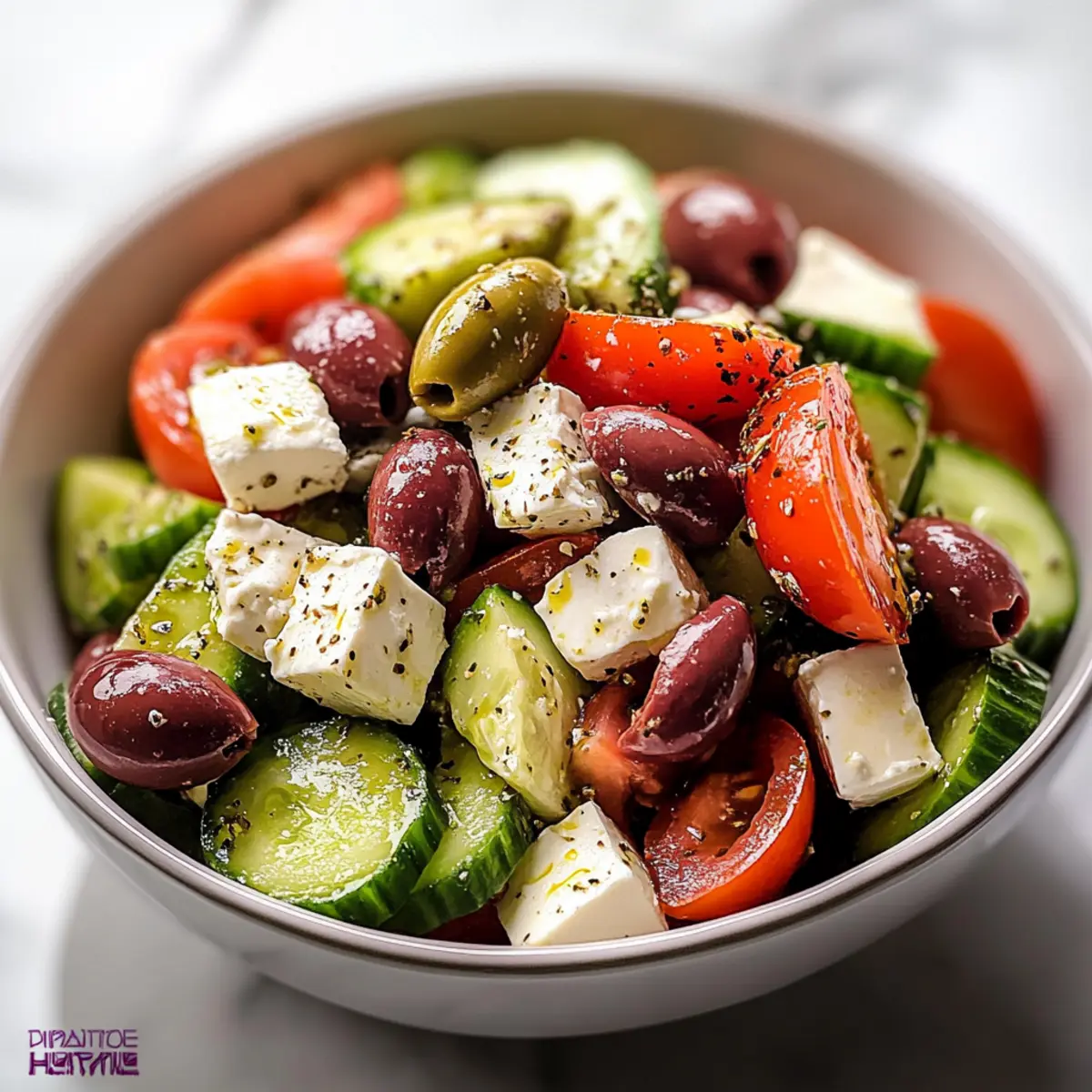
Why is this Greek Salad a Must-Try?
Bursting with freshness: This Traditional Greek Salad features the juiciest tomatoes and the crunchiest cucumbers, offering a vibrant flavor profile that's simply irresistible. Healthful and light: Perfect for those watching their calories, this salad keeps you full without weighing you down. Quick preparation: In just 15 minutes, you can create a beautiful, wholesome dish that impresses friends and family alike. Versatile options: It pairs effortlessly with grilled lamb, chicken souvlaki, or even a simple piece of crusty bread. Crowd favorite: Bring this dish to gatherings, and watch it disappear while everyone asks for seconds! Enjoy it as a standalone or a side and experience the bright tastes of the Mediterranean. Pair it with Chicken Salad Apples for a delightful meal!
Traditional Greek Salad Ingredients
• Get ready to make a vibrant dish!
For the Salad
- Tomatoes – Use ripe, in-season tomatoes for a burst of sweetness; cherry tomatoes work well too.
- Cucumber – Persian or English cucumbers are best for their crunch; peel if the skin is thick.
- Red Onion – Adds a sharp bite; soaking in water can tone down its intensity.
- Green Bell Pepper – Optional for that traditional crunch and color; slice thinly for an even texture.
- Kalamata Olives – Provides a briny flavor; you can use either pitted or whole olives based on your taste.
- Feta Cheese – Use a block for a creamy texture and richer taste; avoid crumbly forms for authenticity.
For the Dressing
- Extra Virgin Olive Oil – Choose a high-quality, fruity oil to enhance the overall flavor of your salad.
- Dried Oregano – A must for seasoning; Greek oregano is the best choice for its robust aroma.
- Red Wine Vinegar (optional) – Adds a dash of tanginess to balance the dish, though it's not always necessary.
With these fresh ingredients, your Traditional Greek Salad will not only be a delightful ensemble for the taste buds but also a refreshing addition to any meal! Enjoy the vibrant Mediterranean flavors!
Step‑by‑Step Instructions for Traditional Greek Salad
Step 1: Prepare the Vegetables
Start by washing your ripe tomatoes and cucumber under cool water. Dice the tomatoes into chunky pieces, and slice the cucumber into thick half-moons. Peel and thinly slice the red onion, soaking it in cold water for about 5 minutes to mellow the flavor. If using, slice the green bell pepper into thin strips, ensuring all veggies are colorful and fresh, perfect for your Traditional Greek Salad.
Step 2: Combine the Ingredients
In a large mixing bowl, combine the chopped tomatoes, cucumber, sliced red onion, and bell pepper if using. Toss in a handful of Kalamata olives to add that delightful briny taste. The salad should look vibrant and inviting, setting the stage for the delicious flavors to meld together in your Traditional Greek Salad.
Step 3: Add the Feta
Carefully place thick slabs of feta cheese on top of the vegetable mixture. Avoid crumbling it just yet, as keeping the feta intact will enhance its creaminess throughout the salad. This will add a beautiful contrast in texture and richness, ensuring your Traditional Greek Salad stands out.
Step 4: Drizzle with Olive Oil and Season
Now, generously drizzle high-quality extra virgin olive oil over the salad, aiming for even coverage. Sprinkle dried oregano liberally on top for that essential Greek flavor, along with a pinch of salt to enhance all the natural tastes. If desired, add a splash of red wine vinegar for an extra tangy kick without overwhelming the freshness.
Step 5: Mix Gently
Using a large spoon, gently toss the ingredients together, ensuring the feta remains somewhat intact. Aim to combine all the flavors without overly mashing the veggies. You want your Traditional Greek Salad to maintain its rustic charm while allowing all the beautiful ingredients to harmonize.
Step 6: Serve and Enjoy
Transfer your beautifully mixed salad to a serving platter or bowl. Ideally, let it sit at room temperature for about 10 minutes to enhance the flavors before serving. Pair your Traditional Greek Salad with crusty bread for a delightful experience, and watch it become a favorite at your table!

Expert Tips for Traditional Greek Salad
- Fresh Ingredients Matter: Choose seasonal vegetables for maximum flavor. Ripe tomatoes and firm cucumbers create a vibrant and tasty salad.
- Rinse the Onions: Soaking red onion in cold water helps mellow its sharpness, ensuring a balanced flavor in your Traditional Greek Salad.
- Avoid Lettuce: Traditional Greek Salad never includes lettuce. Stick to the veggies mentioned for an authentic experience without added fillers.
- Dress Before Serving: Add your olive oil, oregano, and vinegar just before serving to keep the salad fresh and crunchy.
- Feta Technique: Use thick slabs of feta and avoid crumbling it too soon to maintain its creamy texture in the salad.
- Customize Wisely: Feel free to adjust the ingredient quantities, but remember, less is more for that rustic twist characteristic of a Traditional Greek Salad.
Traditional Greek Salad Variations
Feel free to mix and match these ideas to personalize your Traditional Greek Salad and make it even more delightful!
- Creamy Avocado: Add diced avocado for a rich, buttery texture that complements the fresh ingredients beautifully. It's a modern twist!
- Spicy Kick: Toss in some sliced jalapeños or red pepper flakes for a touch of heat. That little extra spice will wake up your taste buds!
- Nutty Flavor: Sprinkle toasted pine nuts or walnuts on top for a crunchy texture and nutty flavor that marries well with the creamy feta.
- Herb Infusion: Try mixing in fresh herbs like basil or mint alongside the oregano for a fragrant, aromatic twist. It’s a refreshing change!
- Make It Grainy: Incorporate cooked quinoa or bulgur wheat to add heartiness and make this salad even more filling. It’s a delightful way to bulk it up!
- Substitute Olives: If you’re not a fan of Kalamata olives, swap them for green olives or even capers for a brinier taste. Each option brings its own unique flavor!
- Dressing Variations: Experiment with a balsamic vinaigrette or lemon vinaigrette instead of traditional olive oil and vinegar for a zesty note. It’s a bright, citrusy twist!
If you're seeking more vibrant salads, consider trying a Jello Salad Cottage or a refreshing Tofu Caesar Salad. Happy cooking!
Make Ahead Options
These Traditional Greek Salad components are perfect for meal prep, saving you time on busy weeknights! You can chop the tomatoes, cucumbers, red onion, and green bell pepper up to 24 hours in advance—just store them in an airtight container in the refrigerator to maintain freshness. The dressing of olive oil, oregano, and optional red wine vinegar can be whisked together and kept in a separate jar for up to 3 days. When it’s time to serve, simply combine the prepped ingredients, drizzle with the dressing, and add the feta on top, mixing gently to preserve its creamy texture. This way, you'll have a refreshing Traditional Greek Salad ready to enjoy with minimal effort!
What to Serve with Traditional Greek Salad (Horiatiki)
Embrace a medley of flavors and textures that accompany this colorful Mediterranean classic beautifully!
- Grilled Lamb Chops: Juicy, tender lamb brings a smoky richness that complements the freshness of the salad.
- Chicken Souvlaki: Skewers of marinated chicken add a savory touch, perfect for a Mediterranean feast.
- Tzatziki Sauce: The creamy yogurt and cucumber dip provides a refreshing contrast that enhances the entire meal.
- Pita Bread: Warm, soft pita is perfect for dipping into the salad's juices, making each bite delightful.
- Roasted Potatoes: Crispy, seasoned potatoes add heartiness, creating a satisfying balance to the lightness of the salad.
- Feta-Stuffed Peppers: For a burst of flavor, serve these savory bites alongside for an extra Mediterranean flair.
- Rose Wine: A chilled glass of this fruity wine enhances the salad's freshness and liveliness beautifully.
The beauty of your meal lies in the delightful combination of these pairings, creating a feast that celebrates the vibrant spirit of the Mediterranean!
How to Store and Freeze Traditional Greek Salad
Fridge: Store leftovers in an airtight container, consuming within up to 3 days for optimal freshness. The salad may lose crunch but will still taste delightful.
Room Temperature: For best results, serve your Traditional Greek Salad immediately as it’s meant to be enjoyed fresh, ideally at room temperature.
Prep Ahead: Chop vegetables in advance, storing them separately in the fridge, and assemble just before serving to preserve their vibrant flavors and textures.
Reheating: Not recommended for this dish, as the ingredients are intended to be fresh. Enjoy your salad cold or at room temperature for the best experience!
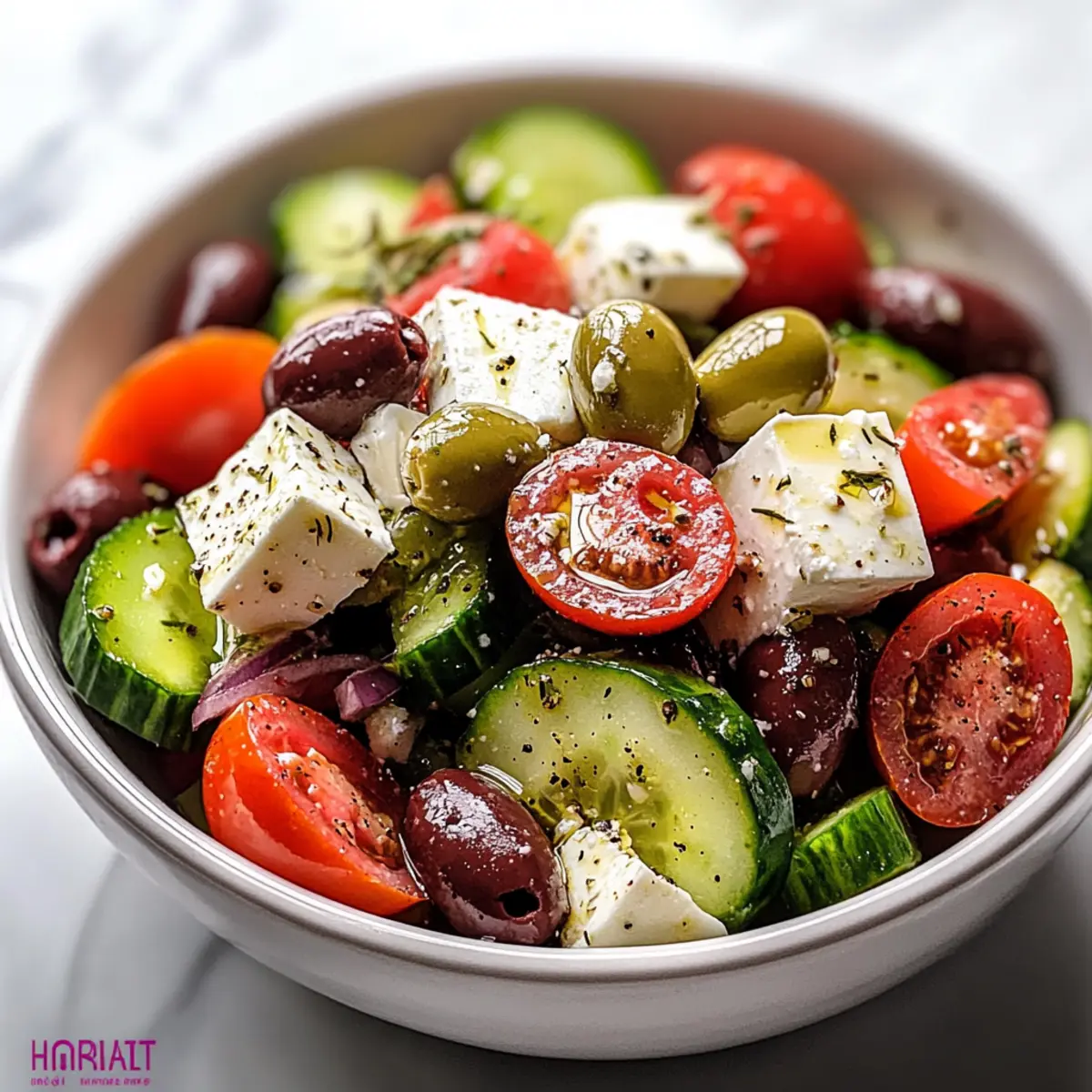
Traditional Greek Salad (Horiatiki) Recipe FAQs
What kind of tomatoes should I use for the salad?
Absolutely! For the best flavor, opt for ripe, in-season tomatoes. They add sweetness and juiciness to your Traditional Greek Salad. Cherry tomatoes can also be a delightful substitute if you're looking for bite-sized pieces.
How do I store leftover Greek salad?
Store any leftovers in an airtight container in the refrigerator, and aim to consume within 3 days for optimal freshness. While the salad may lose some of its crunch, the flavors will still meld beautifully, making it a delicious option for lunch the next day!
Can I freeze Traditional Greek Salad?
It's best to avoid freezing this salad. The ingredients, particularly the fresh vegetables, do not freeze well and will lose their crisp texture. Enjoy the salad fresh or meal-prep the vegetables in advance, keeping them separate, and assemble just before serving for maximum freshness.
What if my salad is too salty?
If you find your Traditional Greek Salad is too salty, try adding a little more cucumber or sweet tomato to help balance the flavors. You can also incorporate additional olive oil to dilute the saltiness without compromising the overall flavor profile.
Is this salad suitable for people with allergies?
Very! This Greek salad is naturally gluten-free and can be adjusted for various dietary restrictions. Just be cautious with feta if you're serving those with dairy allergies. Use a dairy-free cheese alternative, or skip the cheese altogether while maintaining the other fresh ingredients for a light and satisfying salad.
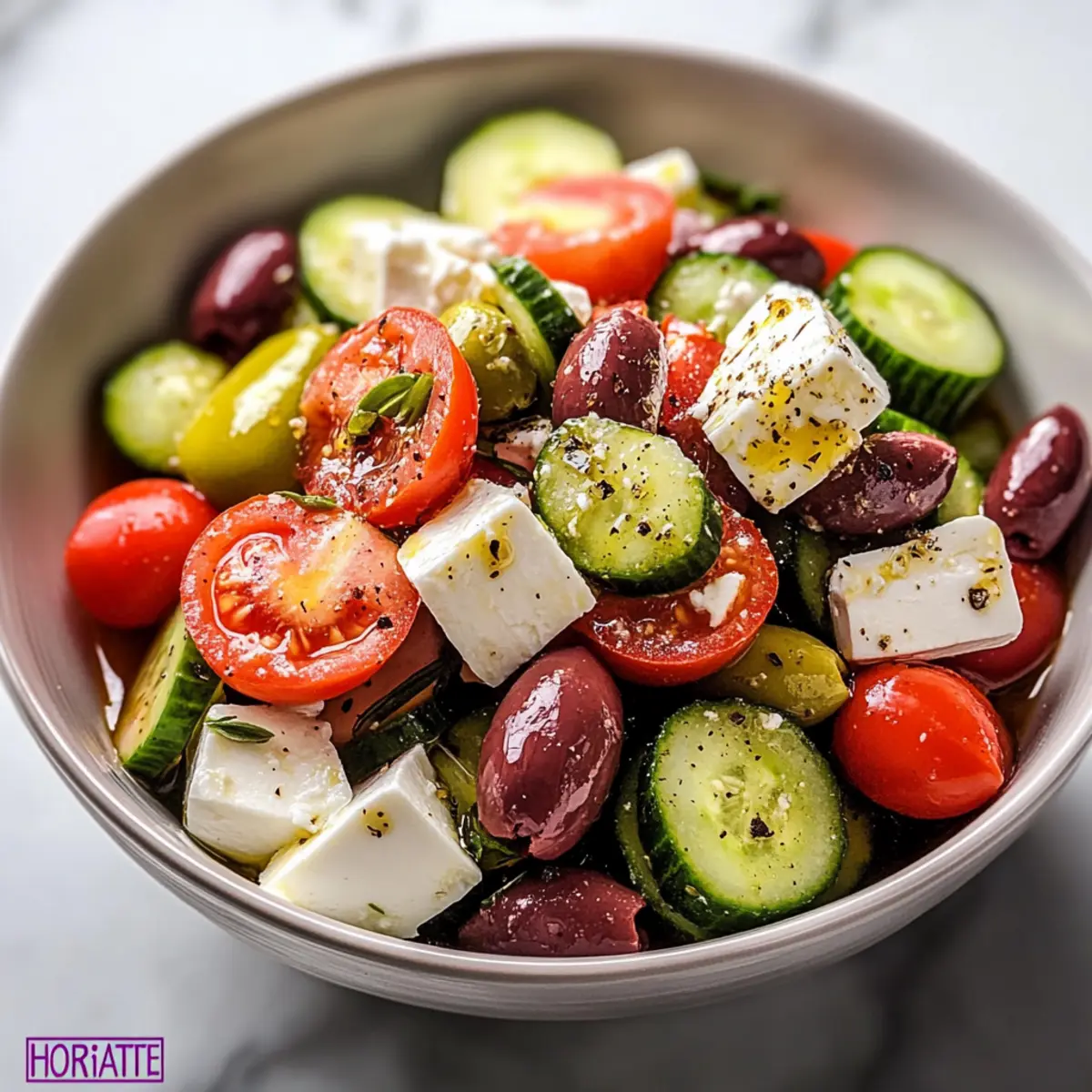
Traditional Greek Salad That Bursts with Fresh Mediterranean Flavor
Ingredients
Equipment
Method
- Wash the tomatoes and cucumber under cool water. Dice tomatoes into chunks and slice cucumber into thick half-moons.
- Peel and thinly slice the red onion, soaking it in cold water for about 5 minutes.
- If using, slice the green bell pepper into thin strips.
- In a large mixing bowl, combine the chopped tomatoes, cucumber, sliced red onion, and bell pepper (if using).
- Toss in Kalamata olives.
- Place slabs of feta cheese on top of the salad.
- Drizzle olive oil over the salad and sprinkle with oregano and a pinch of salt.
- Toss gently to combine the ingredients.
- Transfer to a serving platter and let sit at room temperature for about 10 minutes before serving.




Leave a Reply