
As I stood there, the vibrant colors of fresh vegetables sizzling in the pan caught my eye, and I couldn't help but feel a rush of excitement. Japchae, a traditional Korean dish made with chewy sweet potato glass noodles, is not just any meal—it’s a culinary adventure that brings together flavors and textures that dance on your palate. With its savory beef (or tofu for the veggie lovers) and an assortment of colorful vegetables, this versatile dish is perfect for both quiet dinners and lively gatherings. Plus, it’s effortlessly customizable, allowing you to tailor it to your taste or dietary needs. Whether you’re craving the comforting familiarity of home-cooked meals or looking to impress your guests, this Japchae recipe is your ticket to a delicious experience. What unique twists will you add to make it your own?
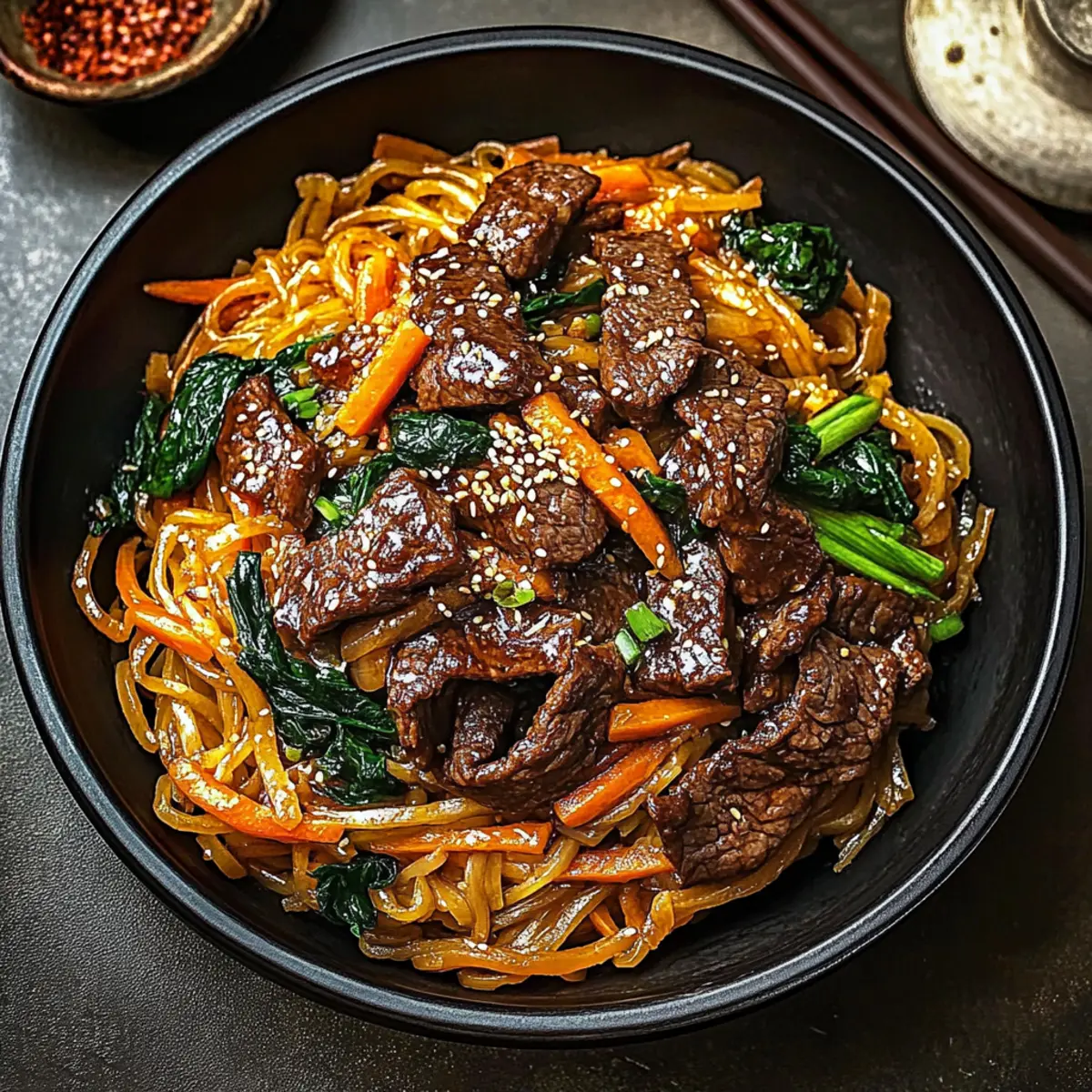
Why is Japchae so beloved?
Vibrant Colors: A feast for the eyes, Japchae showcases an array of colorful vegetables and glossy noodles, making every bite a delight.
Customizable Delight: Whether you're a meat lover or vegetarian, it caters to everyone's palate with easy protein swaps like chicken or tofu.
Quick Cooking: Ready in under 30 minutes, it’s perfect for busy weeknights or unexpected guests. If you’re searching for a creative meal, check out this make-ahead tip.
Nutritional Boost: Packed with fiber and nutrients, this dish not only satisfies your cravings but also energizes your body.
Cultural Connection: Enjoying Japchae brings a touch of Korean celebration to your table, creating memories that bind family and friends together.
Japchae Ingredients
For the Noodles
• Sweet Potato Glass Noodles (Dangmyeon) – Provides a uniquely chewy texture, perfect for authentic Japchae.
For the Protein
• Beef (or Chicken/Tofu) – Adds rich protein; choose sirloin for the best texture or tofu for a vegetarian twist.
For the Vegetables
• Carrots – Contributes natural sweetness and vibrant color; can swap for bell peppers for a different taste.
• Spinach – Adds nutrition and pops of green; bok choy or kale makes for a great alternative.
• Onion – Brings savory depth; shallots can be used for a milder flavor.
• Garlic – Enhances aroma and flavor; fresh is always preferable over powdered.
For the Sauces
• Soy Sauce – Provides umami and saltiness; opt for low-sodium for a healthier choice.
• Sesame Oil – Imparts rich, nutty flavor; light olive oil can be used for a different twist.
For the Garnish
• Green Onions – Freshly sliced for a bright finish; cilantro adds a wonderful herbaceous note instead.
• Sesame Seeds – Optional, but they add an extra crunch and nutty flavor.
Feel free to experiment with these ingredients in your Japchae and make it your own!
Step‑by‑Step Instructions for Japchae
Step 1: Cook Noodles
Begin by bringing a large pot of water to a boil. Add the sweet potato glass noodles (Dangmyeon) and cook according to package instructions, typically about 6-8 minutes, until they are al dente and somewhat translucent. Once done, drain the noodles in a colander and rinse them under cold water to stop the cooking process. Set them aside for later.
Step 2: Prepare Beef (or Chosen Protein)
While the noodles cool, take your beef and slice it thinly against the grain to ensure tenderness. In a mixing bowl, combine the sliced beef with a marinade of soy sauce, a splash of sesame oil, and minced garlic. Allow it to marinate for at least 10-15 minutes as you prepare the vegetables, letting the flavors meld beautifully.
Step 3: Stir-fry Vegetables
In a large, non-stick skillet or wok, heat a tablespoon of oil over medium-high heat. Add sliced onions, thinly julienned carrots, and fresh spinach. Stir-fry for about 3-4 minutes until the vegetables are vibrant and just tender, maintaining their crunch. Once finished, remove the veggies from the pan and set them aside while you cook the protein.
Step 4: Cook Protein
Using the same skillet, add a little more oil if necessary and increase the heat to high. Carefully add the marinated beef (or your chosen protein) to the pan, spreading it out for even cooking. Stir-fry for 4-5 minutes until the meat is browned and cooked through. Ensure that it is no longer pink before proceeding to the next step.
Step 5: Combine Ingredients
Once the protein is cooked, lower the heat to medium and return the stir-fried vegetables and the prepared noodles back into the pan. Gently toss everything together, ensuring the noodles, protein, and veggies are well combined. Drizzle additional soy sauce or sesame oil to taste, allowing the flavors to meld together beautifully.
Step 6: Garnish and Serve
Finally, transfer your vibrant Japchae to a serving platter. Sprinkle the dish with freshly sliced green onions and sesame seeds for added flavor and crunch. Serve warm, and enjoy the delightful harmony of textures and flavors that make this Japchae a family favorite!
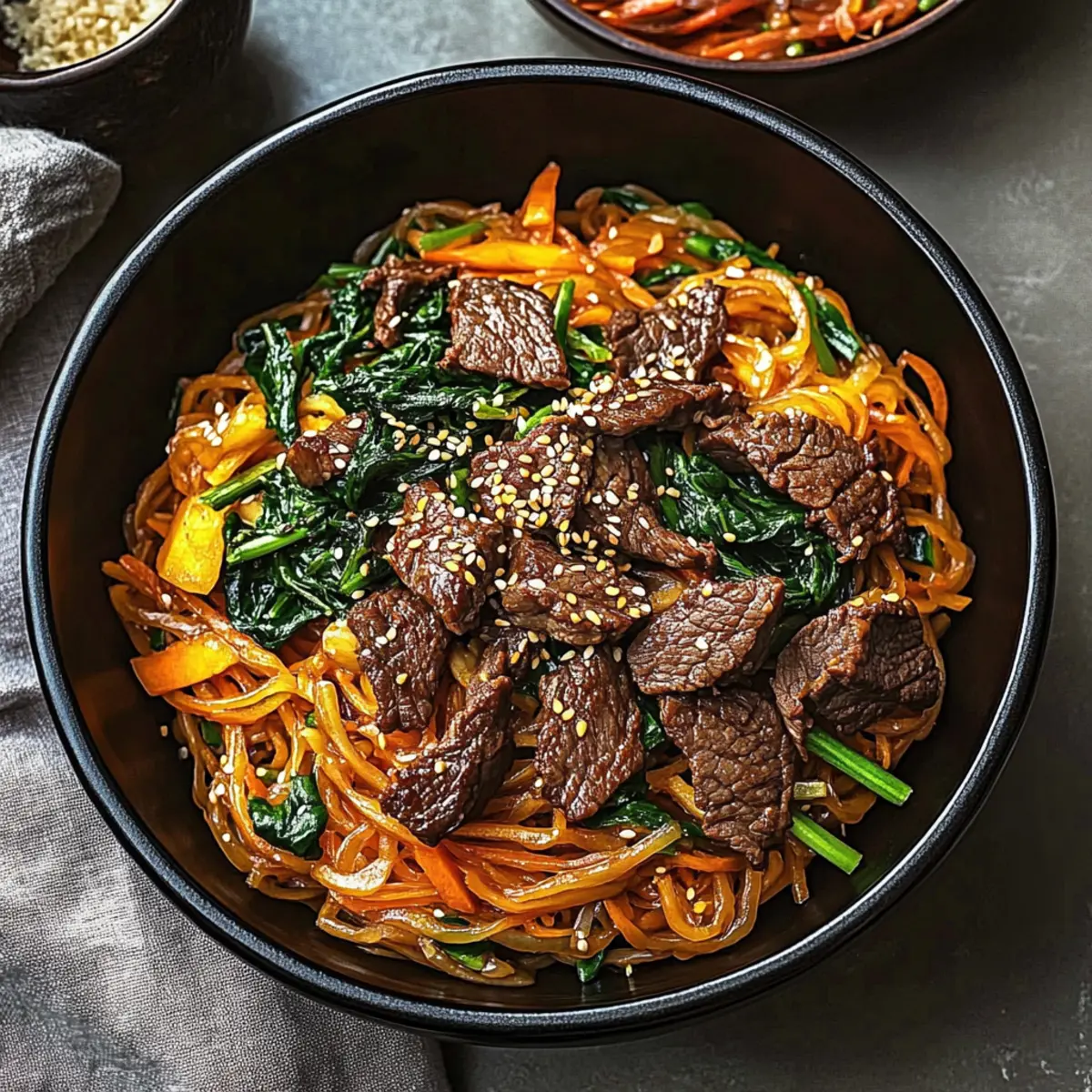
Japchae Variations & Substitutions
Feel free to explore your creativity and customize this delightful dish to suit your tastes and dietary preferences!
-
Vegetarian-Friendly: Swap beef for tofu or tempeh for a protein-packed, plant-based alternative. The chewy texture complements the noodles beautifully.
-
Gluten-Free: Use gluten-free soy sauce instead of regular soy sauce for this dish to make it suitable for gluten-sensitive diners. Your flavor won’t lose a beat!
-
Spicy Kick: Add a spoonful of gochujang to the stir-fry for a spicy twist that will elevate the flavor profile. Just a touch can add heat without overwhelming the dish.
-
Extra Veggies: Incorporate mushrooms or zucchini for additional texture and flavor. They’ll blend seamlessly into your colorful medley while increasing the nutritional value.
-
Nutty Flavor: Toss in some chopped nuts, like cashews or peanuts, before serving. They add a delightful crunch and rich taste to your Japchae.
-
Citrus Zing: A squeeze of fresh lime or lemon juice before serving can lighten the dish. It’s a simple way to brighten flavors and enhance the overall experience.
-
Herbaceous Touch: Fresh herbs like cilantro or Thai basil can invigorate your Japchae. Gently fold them in just before serving for a fresh, aromatic finish.
-
Make-Ahead Trick: Prepare the vegetables and noodles in advance and combine them just before serving. This is perfect for busy nights and ensures freshness. If you’d like to make it ahead of time, check out this make-ahead tip.
Let your imagination run wild with these variations, and enjoy the comfort of a homemade meal that feels uniquely yours!
Make Ahead Options
Preparation is key with this Japchae recipe, and it's perfect for busy home cooks looking to save time! You can cook the sweet potato glass noodles up to 24 hours in advance; simply rinse them under cold water after cooking to prevent sticking. Additionally, marinate the beef (or tofu) and pre-chop the vegetables up to 3 days ahead, storing them separately in the refrigerator to maintain freshness. When you're ready to enjoy your Japchae, stir-fry everything together just before serving, ensuring a quick and satisfying meal that brings the delicious flavors of Korea to your table with minimal effort. Enjoy your homemade Japchae!
Expert Tips for Making Japchae
-
Use Non-Stick Cookware: A non-stick skillet helps prevent the sweet potato noodles from sticking, ensuring a seamless stir-fry experience.
-
Don’t Overcook Noodles: Keep an eye on the cooking time; the noodles should remain al dente for that perfect chewy texture that Japchae is known for.
-
Marinate the Protein: Allowing the beef (or chosen protein) to marinate enhances the flavor significantly. A quick marinade of soy sauce, sesame oil, and garlic works wonders.
-
Stir-Fry in Batches: If you're making a large quantity, it’s easier to stir-fry vegetables and protein in batches. This prevents overcrowding the pan, which can lead to steaming instead of searing.
-
Customize with Vegetables: Don't hesitate to get creative! Add your favorite vegetables like bell peppers or mushrooms for additional texture and flavor.
-
Adjust to Taste: Japchae is highly adaptable; taste and adjust the seasoning with extra soy sauce or sesame oil to make it just right for your family.
What to Serve with Japchae
Create a complete dining experience to elevate your Japchae into a memorable meal that delights every guest.
- Korean Fried Chicken: Juicy, crispy, and flavorful, this dish complements the savory notes of Japchae beautifully for a true Korean feast.
- Kimchi: The tangy, spicy crunch of fermented vegetables adds a zesty contrast that brightens the rich flavors of the noodles.
- Steamed Rice: A simple side, fluffy white rice balances the savory stir-fry and provides a comforting base to soak up all the sauce.
- Vegetable Tempura: Lightly battered and fried veggies add texture and a delightful crunch, making every bite of Japchae even more exciting.
- Sliced Cucumbers with Sesame Dressing: Refreshing and crisp, this dish offers a cool palate cleanser, enhancing the meal's overall flavor profile.
- Miso Soup: A warm and soothing counterpart, its umami-rich broth adds depth to your dining experience and complements the noodles perfectly.
- Fruit Salad with Citrus Dressing: A light and refreshing finish, the sweet and tangy notes contrast beautifully with the savory Japchae, completing your meal on a bright note.
- Soursop or Lychee Cold Drink: This fruity beverage adds a refreshing twist, balancing the meal and providing a sweet contrast to the savory flavors!
How to Store and Freeze Japchae
Fridge: Store leftover Japchae in an airtight container for up to 3 days. To maintain the texture, ensure it's cooled before sealing.
Freezer: Freeze Japchae in freezer-safe containers for up to 2 months. Cool completely before freezing to prevent ice crystals.
Reheating: To reheat, place the frozen or refrigerated Japchae in a skillet with a splash of water over medium heat. Stir gently until heated through. Enjoy this delicious dish with its original flavors!
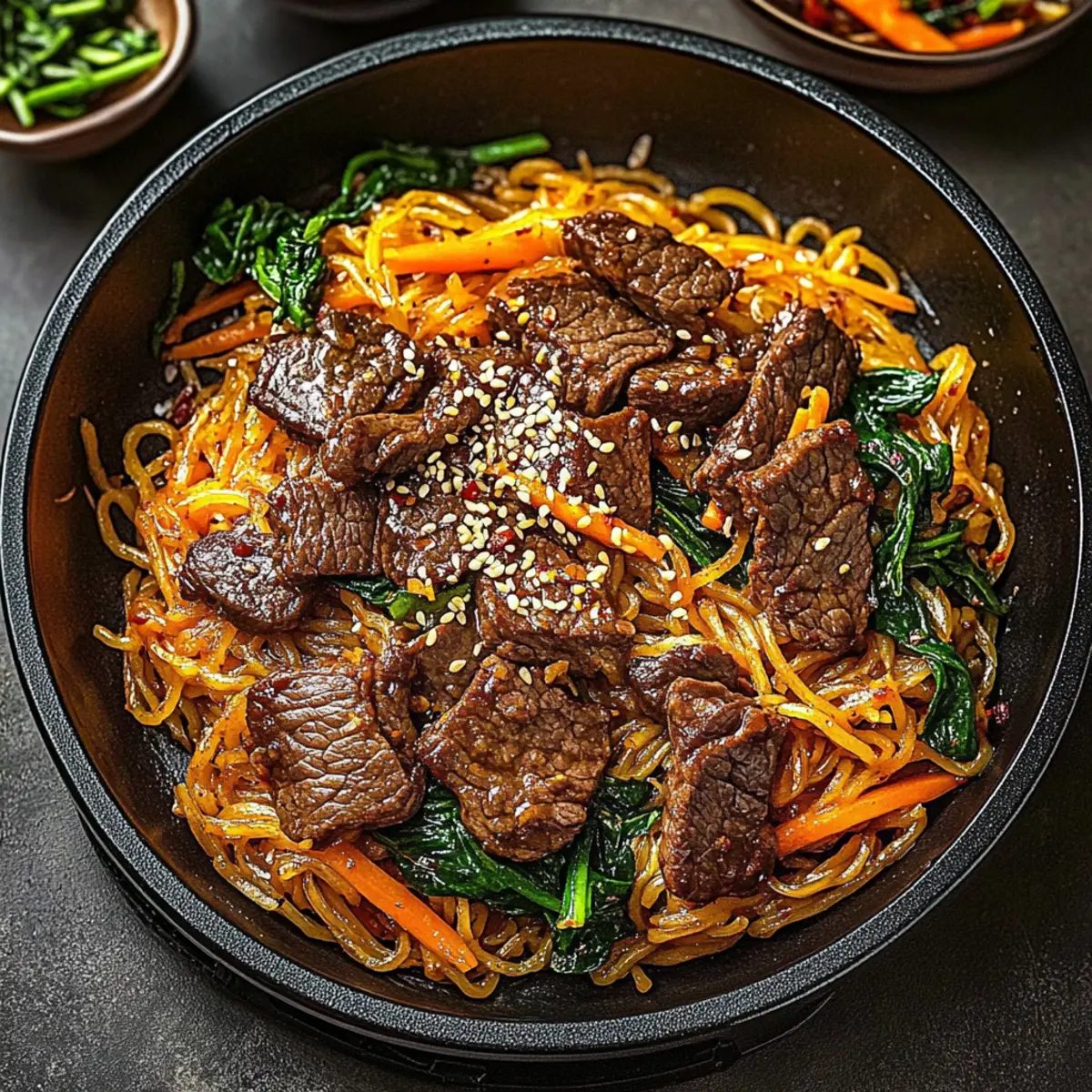
Japchae Recipe FAQs
What type of sweet potato noodles should I use for Japchae?
Absolutely! You should use sweet potato glass noodles, known as "Dangmyeon." They provide that distinctive chewy texture essential for authentic Japchae. If you’re gluten-free, these noodles are perfect as they are made from sweet potatoes and contain no wheat.
How should I store leftover Japchae?
To store your leftover Japchae, place it in an airtight container and refrigerate it. It can last up to 3 days. Make sure it’s cooled to room temperature before sealing the container to maintain its delightful texture.
Can I freeze Japchae? If so, how?
Yes, you can absolutely freeze Japchae! First, let it cool completely. Then, transfer it to a freezer-safe container, making sure to leave some room for expansion. You can freeze it for up to 2 months. When you're ready to enjoy it, simply reheat on the stove with a splash of water until warmed through.
What should I do if my noodles become too sticky during cooking?
Very! If your noodles become sticky, they may have overcooked. For next time, watch the boiling time closely and rinse them under cold water immediately after draining to stop the cooking process. If they still stick together, toss them with a little sesame oil to help separate them.
Is there a way to make Japchae suitable for my gluten-free friends?
Absolutely! Just use gluten-free soy sauce (often labeled tamari) instead of regular soy sauce, and stick with the sweet potato noodles which are naturally gluten-free. You can also customize the protein, using tofu or tempeh to keep it plant-based and gluten-free, making everyone feel included!
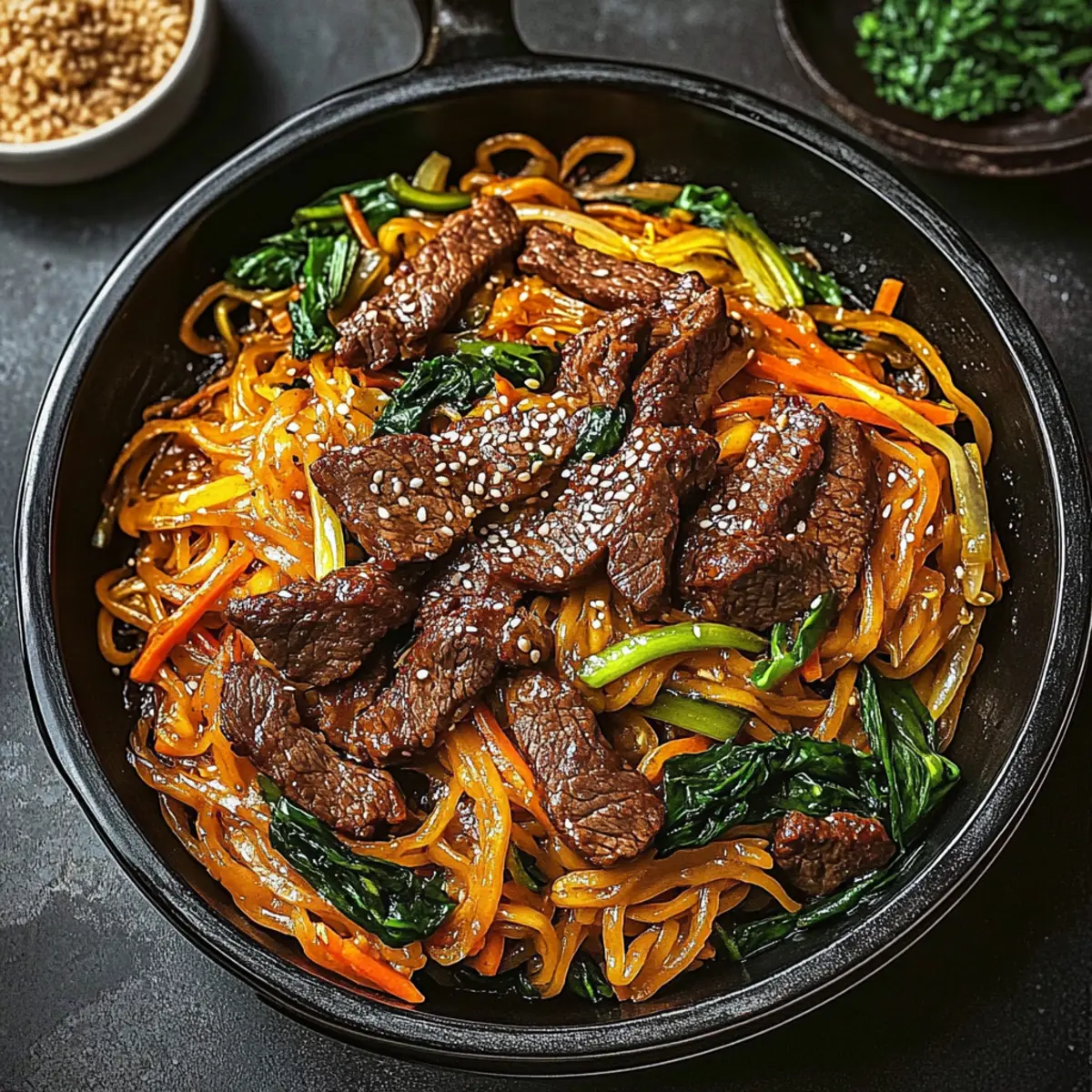
Savory Japchae: Delightful Korean Noodles Your Family Will Love
Ingredients
Equipment
Method
- Begin by bringing a large pot of water to a boil. Add the sweet potato glass noodles (Dangmyeon) and cook according to package instructions, typically about 6-8 minutes, until they are al dente and somewhat translucent. Once done, drain the noodles in a colander and rinse them under cold water to stop the cooking process. Set them aside for later.
- While the noodles cool, take your beef and slice it thinly against the grain to ensure tenderness. In a mixing bowl, combine the sliced beef with a marinade of soy sauce, a splash of sesame oil, and minced garlic. Allow it to marinate for at least 10-15 minutes as you prepare the vegetables.
- In a large, non-stick skillet or wok, heat a tablespoon of oil over medium-high heat. Add sliced onions, thinly julienned carrots, and fresh spinach. Stir-fry for about 3-4 minutes until the vegetables are vibrant and just tender.
- Using the same skillet, add a little more oil if necessary and increase the heat to high. Carefully add the marinated beef (or your chosen protein) to the pan, spreading it out for even cooking. Stir-fry for 4-5 minutes until the meat is browned and cooked through.
- Once the protein is cooked, lower the heat to medium and return the stir-fried vegetables and the prepared noodles back into the pan. Gently toss everything together.
- Finally, transfer your vibrant Japchae to a serving platter. Sprinkle the dish with freshly sliced green onions and sesame seeds for added flavor.




Leave a Reply