
Just the other day, I found myself whisked away in a culinary daydream, imagining the delightful aroma of freshly baked Turkish Flatbread wafting through my kitchen. Turkish Pide, with its pillowy dough and savory fillings, is a marvel that transports you straight to the vibrant streets of Istanbul. Perfect as a shared appetizer or a filling main course, this recipe is not only quick to prepare but also an exceptional way to impress your loved ones. Whether you fill it with ground beef, melty cheese, or colorful roasted veggies, your taste buds are in for a joyful surprise. Ready to create a little magic in your kitchen? Let’s dive into the world of Turkish Pide and bring this delicious tradition to life!
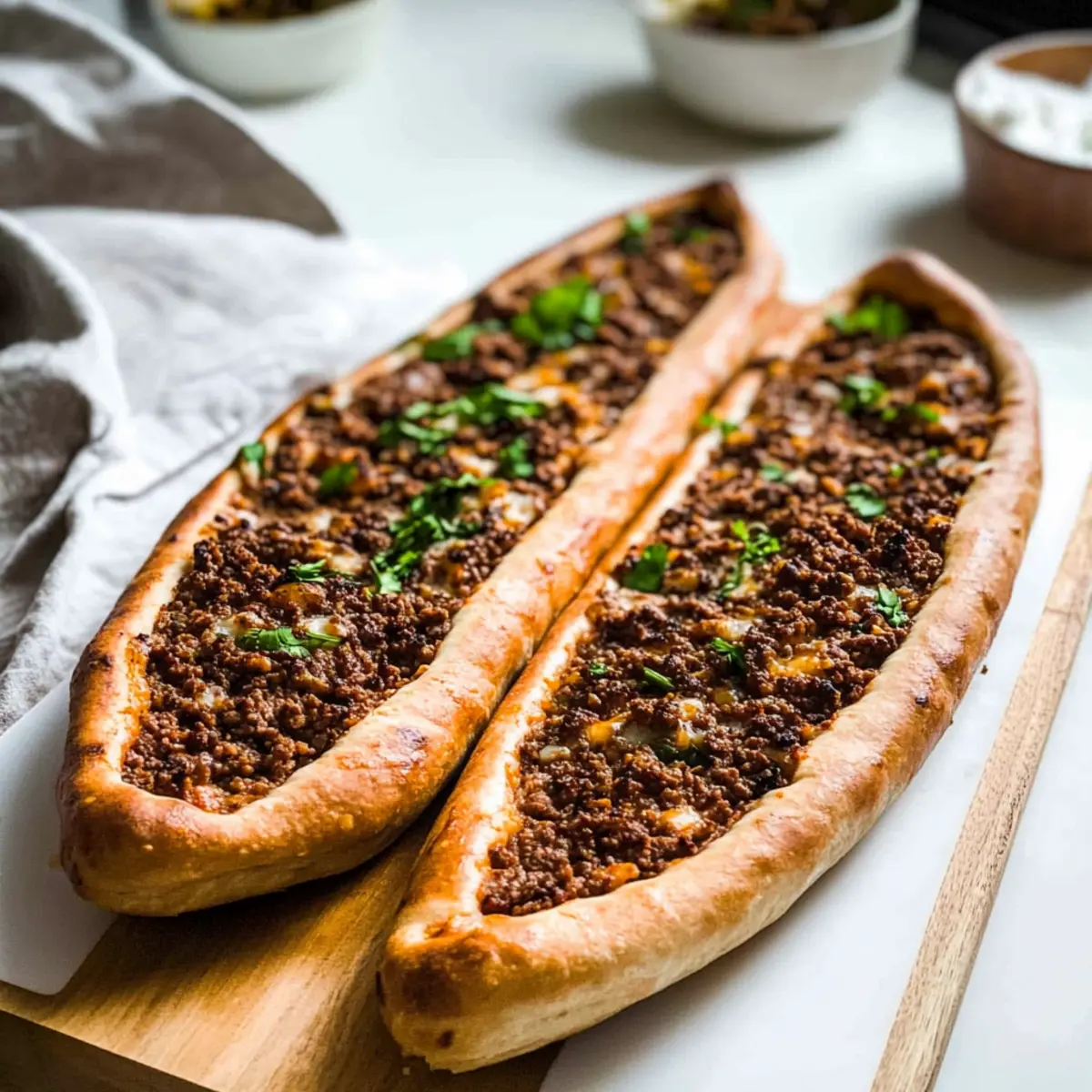
Why is Turkish Flatbread a Must-Try?
Satisfying Versatility: This Turkish Flatbread can be filled with endless combinations, from savory ground beef to vibrant roasted vegetables, ensuring there's something for everyone.
Time-Saving Delight: With a simple preparation process and a quick bake time, you’ll have a delicious homemade meal ready in no time.
Gourmet Appeal: Impress family and friends with this authentic Turkish dish that rivals restaurant offerings. Serve alongside a refreshing salad or Turkish Eggs Discover for a complete meal!
Cultural Experience: Enjoy a slice of Turkey in your home, as Turkish Pide is loved by locals and visitors alike, making it perfect for gatherings.
Golden Perfection: The crispy crust and soft, chewy interior create a mouthwatering texture that will leave everyone wanting more!
Turkish Flatbread Ingredients
For the Dough
• Bread Flour – Essential for a strong base; substitute with all-purpose flour if needed.
• Instant Yeast – Helps the dough rise quickly; active dry yeast works too, just activate it in warm water first.
• Sugar – Enhances flavor and activates yeast; can be omitted for a less sweet taste.
• Kosher Salt – Balances sweetness and enhances flavor; regular salt can replace it, but adjust quantity as it’s saltier.
• Olive Oil – Keeps the dough moist; can be replaced with melted butter for a different taste.
• Warm Water – Activates the yeast and hydrates the dough; ensure it’s around 105-110°F for best results.
• Warm Milk – Adds richness to the dough; substitute with more warm water if lactose-free.
• Egg + Water (for wash) – Adds shine and a golden color upon baking.
For the Toppings
• Kesar Akkawi or Mozzarella Cheese – Provides creaminess; substitute with any melting cheese if unavailable.
• Sucuk (or ground beef) – Delivers flavor and protein; swap for ground lamb or turkey for a variation.
• Sesame/Nigella Seeds (optional) – Adds texture and flavor; feel free to omit if desired.
Step‑by‑Step Instructions for Turkish Flatbread
Step 1: Prepare Dough
In a stand mixer, combine 4 cups of bread flour, 1 packet of instant yeast, 1 tablespoon of sugar, and 1 teaspoon of kosher salt. Gradually add 1 cup of warm water and 1 cup of warm milk, along with 2 tablespoons of olive oil. Mix on medium speed for about 10 minutes until the dough is smooth and elastic. The consistency should be soft but not sticky.
Step 2: Rest Dough
Once the dough is kneaded, shape it into a ball and place it in a lightly oiled bowl. Cover the bowl with a damp cloth or plastic wrap, then set it aside in a warm area for about 60-90 minutes. The Turkish Flatbread dough should noticeably rise and double in size, becoming puffy and airy.
Step 3: Preheat Oven
While the dough is proofing, preheat your oven to 500°F (260°C), placing a pizza stone or baking steel inside. Allow it to heat for at least 45 minutes to ensure a crisp crust. This step is crucial for achieving that perfect golden-brown finish on your Turkish Flatbread.
Step 4: Divide & Roll Dough
After the dough has risen, gently punch it down to release excess air. Divide the dough into 5 equal pieces, and on a lightly floured surface, roll each piece into an oval shape about 18 inches long. Make sure the thickness is uniform, as this helps with even cooking.
Step 5: Fill Pide
Place your desired filling, such as a mixture of ground beef and cheese, down the center of each rolled dough oval. Gently fold the edges over the filling to create a boat shape, then pinch the ends to seal. Brush the tops with an egg wash made from 1 beaten egg and a tablespoon of water, and sprinkle with sesame or nigella seeds if desired.
Step 6: Bake
Carefully transfer your prepared Turkish Pide to a baking sheet sprinkled with semolina or cornmeal to prevent sticking. Bake in the preheated oven for 14-17 minutes or until they turn golden brown and the cheese is bubbly. Keep an eye on them, as they might bake faster if using a pizza stone.
Step 7: Cool & Serve
Once baked, remove the Turkish Flatbread from the oven and let them cool slightly on a wire rack. This resting time allows the cheese to set. Slice the pide into portions and serve warm, sharing this delightful pastry with family and friends for an authentic taste of Turkish cuisine.
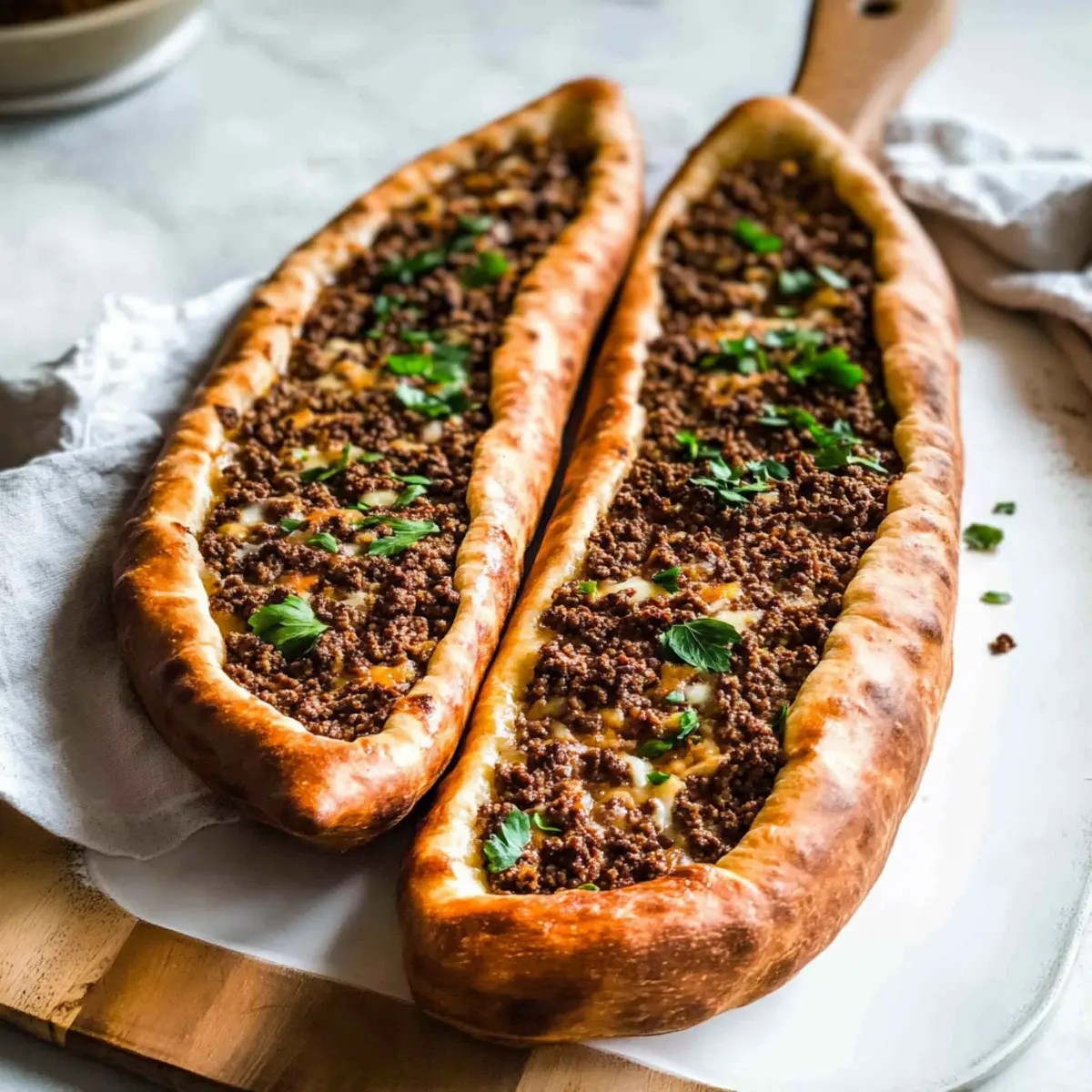
What to Serve with Savory Turkish Pide?
Nothing quite compares to the joy of savoring Turkish Pide, especially when accompanied by delightful sides that enhance its rich flavors and textures.
-
Turkish Lentil Soup: A warm and comforting soup that adds a hearty, nutritious element to your meal. Its earthy lentils beautifully contrast the fluffy pide, creating a satisfying balance.
-
Fresh Tabbouleh Salad: This vibrant salad, bursting with fresh parsley, tomatoes, and lemony dressing, can elevate your meal with a refreshing zing, harmonizing perfectly with the savory pide.
-
Grilled Vegetables: Charred zucchini, bell peppers, and eggplants provide a smoky sweetness that complements the pide’s flavors. Toss them in olive oil and herbs for an irresistible side.
-
Yogurt Sauce: A creamy garlic yogurt sauce brings a cooling effect, balancing out the rich fillings of the pide. It serves as a comforting dip or drizzle on top.
-
Cilbir (Turkish Poached Eggs): This rich dish pairs perfectly with pide, offering silky eggs and garlicky yogurt, enhancing the overall culinary experience with a delightful textural contrast.
-
Simit (Turkish Bagels): This sesame-encrusted bread adds a crunchy snack option, making a delightful companion for the pide while also introducing a delightful nutty flavor.
-
Pineapple Mint Cooler: For a refreshing beverage, this tropical drink combines sweetness and minty freshness, cleansing your palate after each bite of pide. It’s simply perfect for warm weather enjoyment.
-
Baklava: End your meal on a sweet note with this luscious dessert. The flaky layers and honey syrup perfectly complement the savory notes of the pide, leaving everyone with a lasting impression.
Make Ahead Options
These Turkish Flatbreads are a fantastic option for meal prep, saving you precious time on busy weeknights! You can prepare the dough up to 24 hours in advance; simply follow the initial steps, then wrap and refrigerate the dough until you’re ready to roll and fill. Additionally, any fillings, such as ground beef or sautéed vegetables, can be made ahead and stored in the fridge for up to 3 days to enhance their flavors. When you’re ready to enjoy your Turkish Flatbread, just bring the dough to room temperature, roll it out, fill it, and bake as directed. This way, you’ll serve fresh, delicious pide that’s just as satisfying as if you made it all at once!
Turkish Flatbread Variations & Substitutions
Invite your culinary creativity to shine as you explore these delightful twists on traditional Turkish Flatbread. Each variation offers a unique flavor experience that will tantalize your taste buds!
-
Vegetarian Delight: Swap ground beef for sautéed spinach and feta to create a wholesome, veggie-loaded pide. The briny cheese complements the earthy greens beautifully, making it a satisfying option for meat-free nights.
-
Cheese Lovers: Experiment with different cheese combinations like feta or aged provolone for added depth. Mixing cheeses can yield delightful surprises, turning each bite into a creamy explosion of flavor!
-
Spice It Up: Amplify your fillings by adding spices like cumin or coriander to the meat mixture. These spices bring an aromatic warmth that elevates the pide, inviting your taste buds on an exotic journey.
-
Nutty Crunch: Incorporate chopped nuts such as pistachios or almonds into your filling for an unexpected crunch. The nutty texture adds both contrast and richness, turning your pide into a gourmet experience.
-
Savory Twist: Substitute traditional meat fillings with spicy chorizo or even roasted vegetables for an exciting flavor boost. Each option adds its own delightful twist, making your Turkish Flatbread a personalized treat!
-
Sweet Surprise: For a unique dessert option, fill the pide with sweetened ricotta and a drizzle of honey. Bake until golden for a mouthwatering finale to any meal that balances indulgence and authenticity.
-
Nut-Free Option: Use oat flour instead of regular flour to keep this dish inclusive for those with nut allergies. Oat flour offers a soft texture while ensuring no nut-related concerns arise!
-
Quick Fix: Use store-bought dough instead of making it from scratch to save time, especially when unexpected guests arrive. A simple shortcut that doesn't compromise on deliciousness!
Embrace the magic of Turkish Flatbread and tailor these suggestions to suit your palate! Whether you’re serving it alongside a refreshing salad or some delightful Turkish Eggs Discover, your loved ones are sure to enjoy this remarkable dish.
Storage Tips for Turkish Flatbread
Fridge: Store leftover Turkish flatbread in an airtight container for up to 3 days. This helps retain its fresh taste while keeping it soft.
Freezer: For longer storage, wrap the Turkish flatbread tightly in plastic wrap or aluminum foil and freeze for up to 2 months. Thaw in the fridge overnight before reheating.
Reheating: Reheat your Turkish flatbread in a preheated oven at 350°F (175°C) for about 10-15 minutes, allowing it to regain its crispy exterior and warm interior.
Room Temperature: If you plan to eat the Turkish flatbread within a few hours, keep it at room temperature in a covered cloth to prevent it from drying out.
Expert Tips for Turkish Flatbread
-
Dough Consistency: Ensure your dough is soft but not sticky; add flour gradually if it clings to your hands. A perfect Turkish flatbread starts with a well-made dough.
-
Preheating is Key: Don't skip preheating your oven! This step guarantees a crispy outer crust that contrasts beautifully with the fluffy interior of your flatbread.
-
Watch the Bake Time: If you’re using a pizza stone, check your Turkish flatbread at around 10-12 minutes to prevent burning. Every oven varies, so stay vigilant!
-
Fillings Galore: Feel free to get creative with fillings! Just remember to avoid overstuffing, or your Turkish flatbread might burst during baking.
-
Glaze for Shine: Brush with egg wash before baking for a lovely golden finish. It not only looks appealing but also enhances flavor.
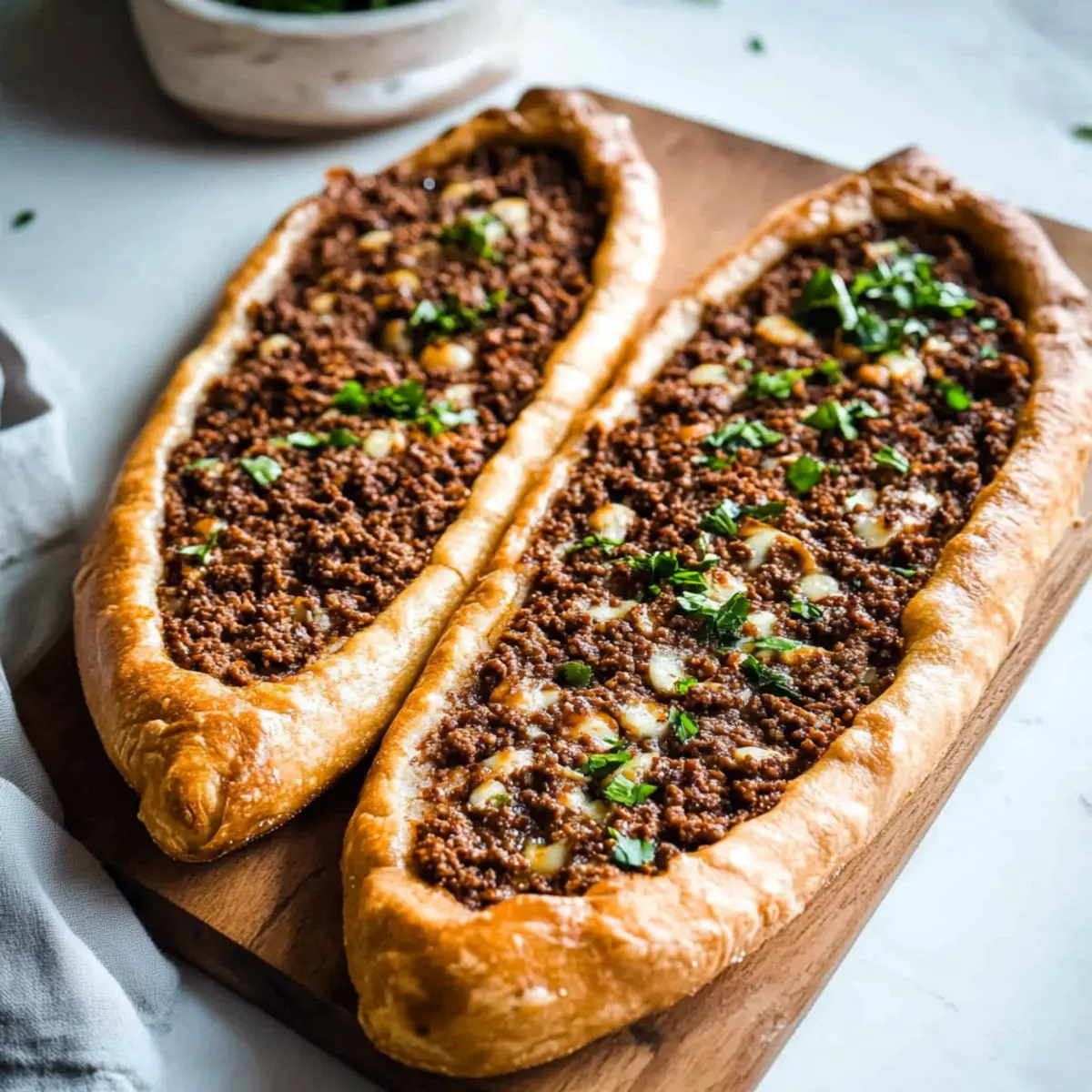
Turkish Flatbread Recipe FAQs
What type of flour should I use for Turkish Flatbread?
For the best results, use bread flour as it provides the necessary structure for the dough. However, if you don’t have bread flour on hand, all-purpose flour works as a suitable substitute, though the texture might be slightly less chewy.
How do I know if my dough is properly risen?
Your dough should double in size during the resting period, usually after 60-90 minutes. Visually, it should look puffy and airy with a smooth surface. If it hasn't risen significantly, it might be due to inactive yeast or a too-cool environment.
How should I store leftover Turkish Flatbread?
Leftover Turkish Flatbread can be stored in an airtight container in the fridge for up to 3 days. To maintain the soft texture, you can wrap each piece in plastic wrap. For longer storage, freeze them wrapped tightly in plastic wrap or aluminum foil for up to 2 months.
Can I freeze Turkish Flatbread?
Absolutely! To freeze, ensure the baked Turkish Flatbread is cooled completely. Wrap each piece tightly in plastic wrap followed by aluminum foil to prevent freezer burn. When you’re ready to enjoy, thaw them in the fridge overnight and reheat in the oven at 350°F (175°C) for about 10-15 minutes.
What should I do if my filling leaks out during baking?
Overstuffing your Turkish Flatbread can cause the filling to leak out, so be cautious with the amount you use. If it does happen, simply keep an eye on the baking time to avoid burning the exposed filling. It might be helpful to seal the edges of the dough tightly.
Are there any dietary considerations I should keep in mind?
If you’re making Turkish Flatbread for someone with dietary restrictions, consider using lactose-free milk or a non-dairy substitute for the dough. For gluten sensitivities, you can experiment with gluten-free all-purpose flour blends, but the texture might vary. Always check labels on packaged ingredients to ensure they meet dietary needs.
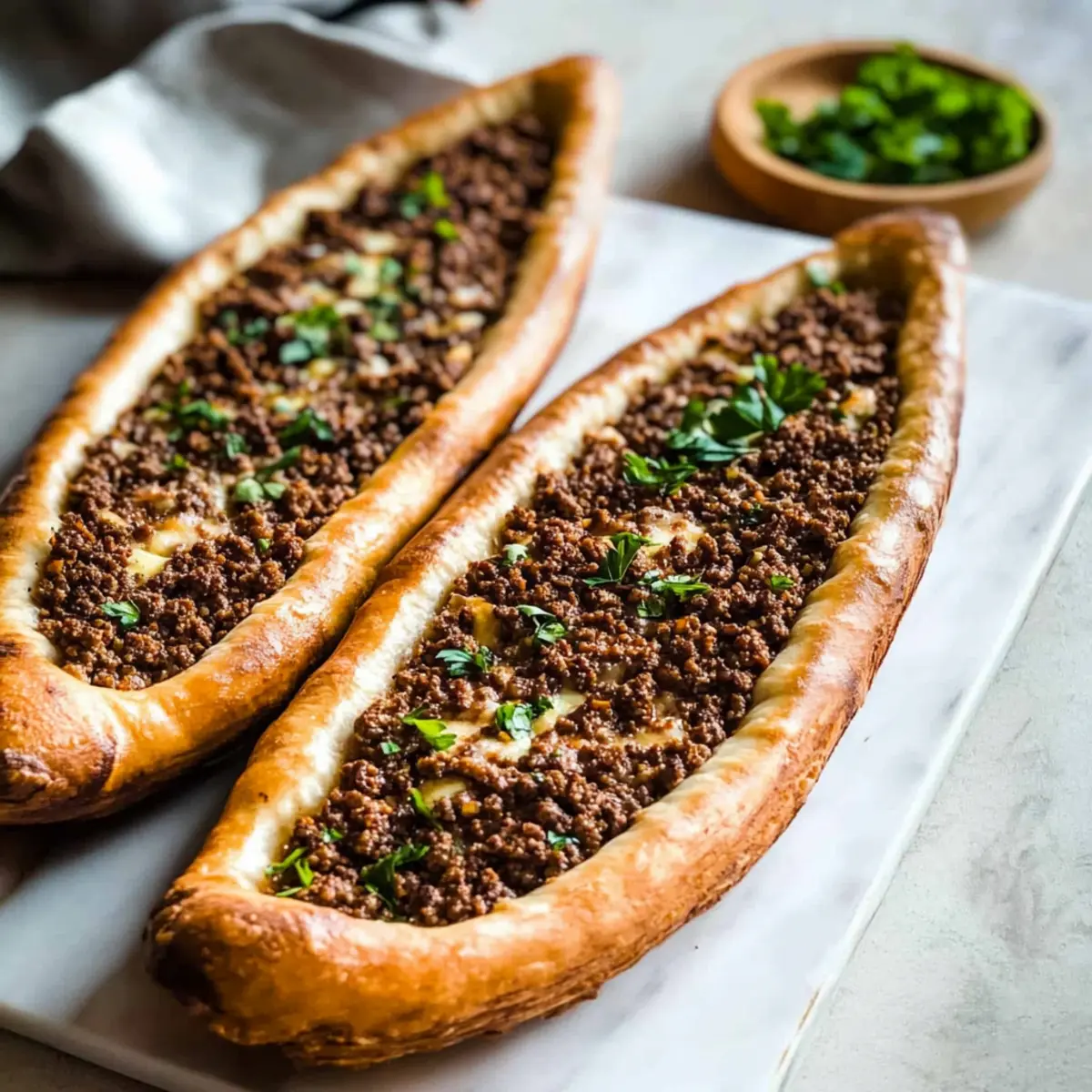
Mouthwatering Turkish Flatbread: A Flavor Explosion Awaits
Ingredients
Equipment
Method
- In a stand mixer, combine 4 cups of bread flour, 1 packet of instant yeast, 1 tablespoon of sugar, and 1 teaspoon of kosher salt. Gradually add 1 cup of warm water and 1 cup of warm milk, along with 2 tablespoons of olive oil. Mix on medium speed for about 10 minutes until the dough is smooth and elastic.
- Once the dough is kneaded, shape it into a ball and place it in a lightly oiled bowl. Cover the bowl with a damp cloth or plastic wrap, then set it aside in a warm area for about 60-90 minutes.
- While the dough is proofing, preheat your oven to 500°F (260°C), placing a pizza stone or baking steel inside. Allow it to heat for at least 45 minutes.
- After the dough has risen, gently punch it down to release excess air. Divide the dough into 5 equal pieces, and roll each piece into an oval shape about 18 inches long.
- Place your desired filling, such as a mixture of ground beef and cheese, down the center of each rolled dough oval. Gently fold the edges over the filling to create a boat shape, then pinch the ends to seal.
- Carefully transfer your prepared Turkish Pide to a baking sheet sprinkled with semolina or cornmeal to prevent sticking. Bake in the preheated oven for 14-17 minutes or until golden brown.
- Once baked, remove the Turkish Flatbread from the oven and let them cool slightly on a wire rack. Slice the pide into portions and serve warm.




Leave a Reply